Fitment context first
Requests are easier to act on when vehicle, position and usage details stay connected. Koni content keeps those cues near every product conversation.
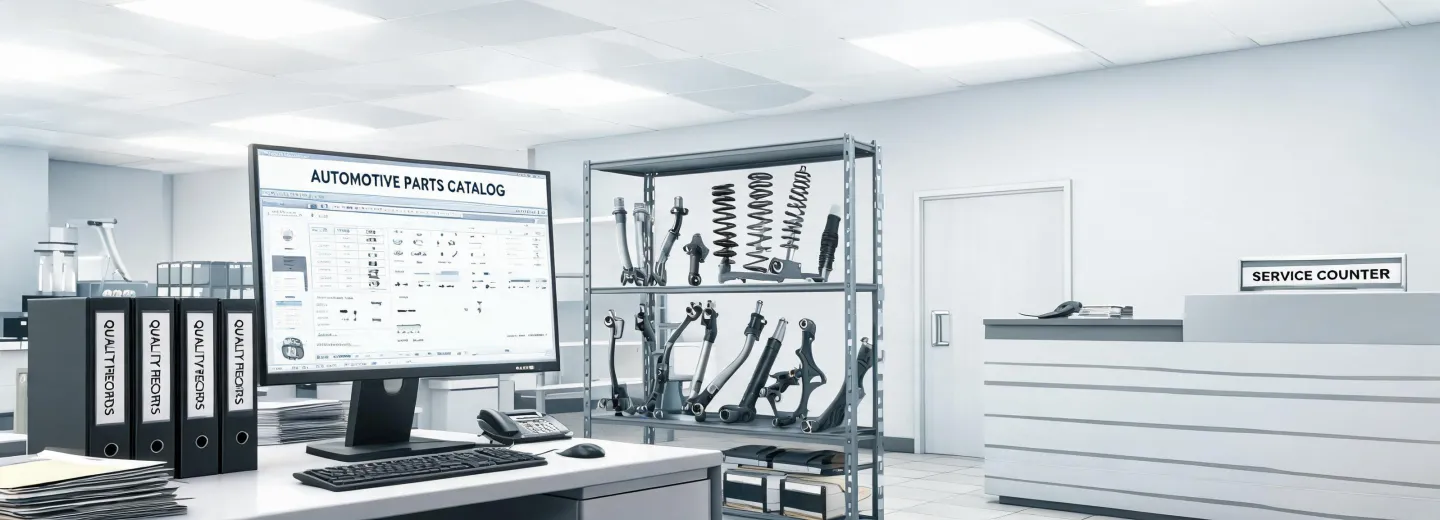
Koni aligns product coverage, fitment context and documentation discipline for teams that need service-bay decisions to connect cleanly with distributor supply.
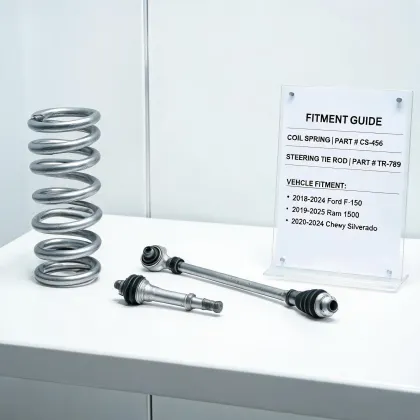
Koni focuses on the part of the buying process where small fitment details have large consequences. A shock absorber, strut, coil spring or steering component can appear simple until the vehicle application, mounting position and service expectation are considered together. The mission is to keep those details visible.
This approach supports distributors, service departments and catalog managers who need a practical path from search term to purchasing decision. It also helps reduce the back-and-forth that can happen when vehicle data is separated from product family language.
Koni aims to support a market where catalog data, service guidance and supply conversations are not treated as separate tasks. Buyers need part names, but they also need confidence that the surrounding details are ready for real workshop use.
The vision is a better connected aftermarket path. A repair network should know what to ask. A distributor should know what documents matter. A sourcing team should understand how a product family maps to the vehicle program they support.
Requests are easier to act on when vehicle, position and usage details stay connected. Koni content keeps those cues near every product conversation.
Product support is framed so catalog teams, buyers and service desks can follow the same source of information without inventing missing fields.
Distributor, garage, fleet and OES questions do not move through the same path. Koni separates channel needs without breaking the main catalog route.
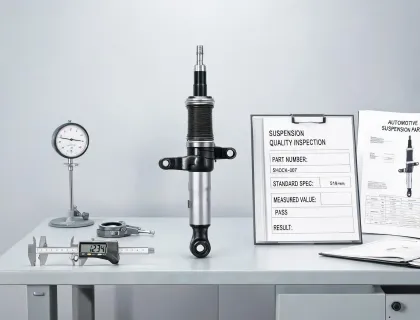
Prototype PPAP, batch review, dimensional control and endurance validation are treated as supply topics, not only engineering phrases.
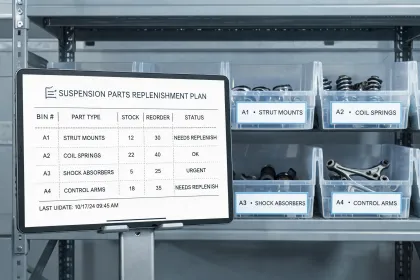
Koni supports buyers who often work between several systems. A distributor may be checking stock while a garage verifies fitment. A fleet team may need a replacement path that can be repeated across many vehicles. An e-commerce catalog may need clear naming before a listing is published.
The site reflects that reality. It keeps navigation direct, product language restrained and inquiry paths close to the moment when a question appears. The result is a site that feels more like a working catalog desk than a brochure.
Send the application, product family and buying role. The conversation can start with the details that affect the order.
Contact Koni